Feb 042013
 
Population explosion . . . NOT

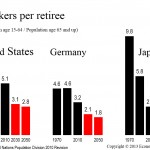
Do Malthusian nightmares about the population explosion keep you up nights? Relax. Chill. We Americans (numbering 315 million) are having too few babies. Middle-class fertility has fallen to about 1.6, far below the replacement rate of 2.1. That means fewer workers to support your Social Security benefits. And the problem [continue reading . . . ]

Jan 112013
 

My friend James McCusker, tongue planted firmly in cheek, suggests that rather than just one trillion-dollar platinum coin as a solution to our debt-deficit-fiscal mess, we mint one worth $50,000 for each of us. That’s roughly 315 million shiny tokens. Poof! Our debt problem goes away. How do you plan [continue reading . . . ]

Jan 102013
 

Don’t miss today’s New York Times obit of the 1986 Nobel laureate and George Mason University professor James M. Buchanan. Like everyone else, Buchanan taught, politicians tend to act in their own self-interest Courting voters at election time, for example, legislators will approve tax cuts and spending increases for projects [continue reading . . . ]

Dec 122012
 
Printing more will do what, exactly?

So we have just started Year 5 of N-ZIRP, the Fed’s near-zero-interest-rate policy, and it is working so well that the Fed will have to keep printing money. What’s wrong with this picture? In fact, despite a massive expansion of the Fed’s balance sheet, and some of the lowest interest [continue reading . . . ]

Sep 172012
 
QE and financial repression

Say what you please about Ben Bernanke’s unconventional monetary policies (quantitative easing, QE for short, and Operation Twist), they’ve been good for the stock market. The first chart shows that stock prices have roughly doubled, give or take a few percentage points, since Dr. Ben launched the first round of [continue reading . . . ]

Sep 042012
 

Fix Medicare, primarily by restricting end-of-life care, as insurance companies do now. Fix Social Security by minor changes to (1) the payroll tax, (2) the benefit formula for high-income beneficiaries and (3) the retirement age. Fix the hopeless hairball that is the U.S. tax code primarily by (1) broadening the [continue reading . . . ]

Aug 072012
 

Back when it was published every other week, I used to treasure Fortune magazine. I looked forward to the iconic annual list of the largest companies. I loved Fortune’s deeply analytical long-form journalism on industries, companies and long-term economic trends. To cite just one example of excellence, more than any [continue reading . . . ]

Jul 062012
 

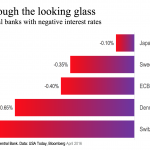
Don’t miss today’s Heard on the Street item in the Wall Street Journal headlined “Central Banks Tilt at Global Windmills.” The item, by Richard Barley, notes that “the People’s Bank of China, the European Central Bank and the National Bank of Denmark all cut rates Thursday, and the Bank of [continue reading . . . ]

Jun 182012
 

The economic headlines are grim almost everywhere you look. An item on Page 1 of today’s Financial Times sums things up succinctly: Growth in the US is slowing, much of Europe is in recession, China’s growth outlook has weakened, the reform processes in India have stalled and other large emerging [continue reading . . . ]

Jun 052012
 

Martin Wolf, much-honored chief economics commentator of the Financial Times, has been my beacon during the financial crisis. So it is especially discouraging to read his June 6, 2012, column, headlined “Panic has become all too rational”. Wolf argues that the advanced economies are caught in a “contained depression,” that [continue reading . . . ]

May 302012
 

Uh, oh. That’s what I find myself muttering these days when I fire up the news browser or open my morning papers. The economic news leaves me with a sense of dread. I find three developments especially worrisome: 1. Europe’s slow-motion economic crisis, now more than three years old, rumbles [continue reading . . . ]

May 162012
 

Are America’s best days in the rear-view mirror? The Economist‘s Lexington columnist reminds us (May 12, 2012, print edition) that bouts of what it labels “declinism” are, well, almost as American as apple pie. It wasn’t so long ago that Japan was buying up iconic U.S. real estate (New York [continue reading . . . ]